Hidden Heading
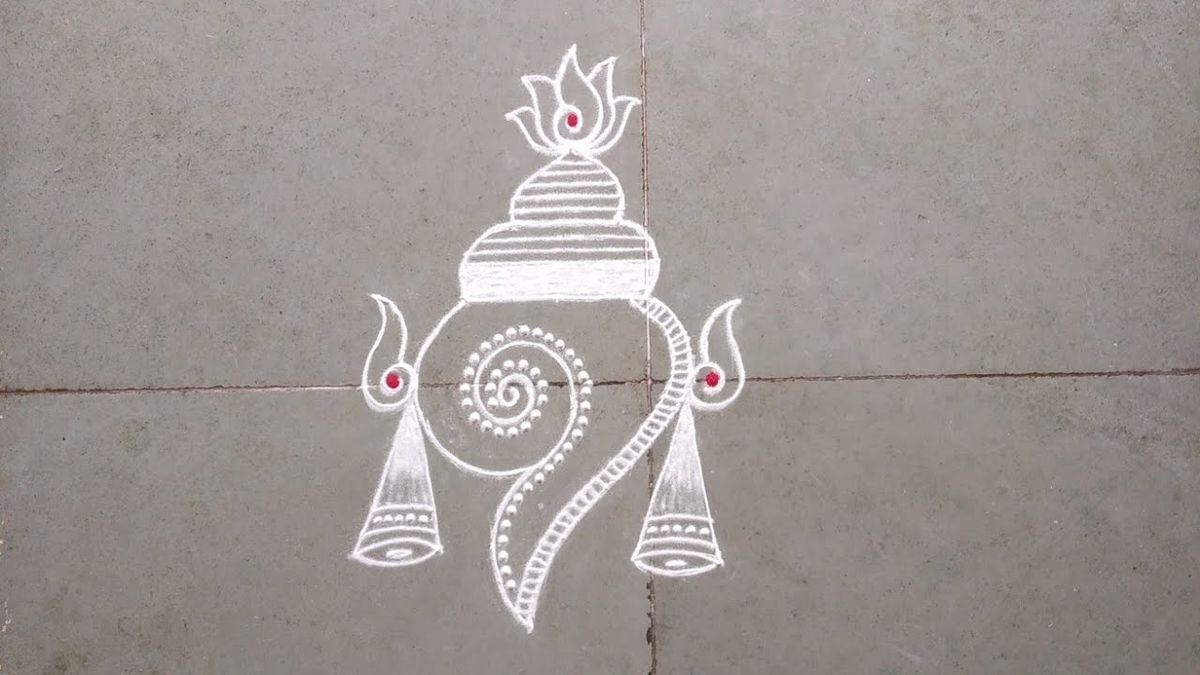
In the vibrant tapestry of Indian traditions, kolam stands out as a daily ritual and an artistic expression of devotion. Among its many motifs, the shank kolam—a design inspired by the sacred conch shell—holds a special place. This blog explores the origins, symbolism, and cultural importance of shank kolam, revealing why it continues to grace thresholds during festivals and auspicious occasions.
What is a Shank Kollam?
A shank kolam is a kolam pattern that incorporates the shankh (conch shell) motif. The shankh is revered in Hinduism as a symbol of purity, prosperity, and the cosmic sound “Om.” Associated with Lord Vishnu and Goddess Lakshmi, it is often used in rituals to invoke divine blessings. When this motif is woven into kolam art, it transforms a simple floor design into a spiritual emblem of harmony and abundance.
Kolam: More Than Just Decoration
Kolam is a traditional floor art drawn at the entrance of homes, particularly in South India. Made with rice flour or coloured powders, kolam serves multiple purposes:
- Spiritual Offering: It is a prayer to deities for prosperity and protection.
- Ecological Harmony: Rice flour feeds ants and birds, reflecting a philosophy of coexistence.
- Aesthetic Beauty: Symmetrical patterns bring visual delight and positive energy.
The Symbolism of the Shankh
The shankh represents:
- Primordial Sound: Believed to echo the vibration of the universe.
- Purity and Prosperity: Used in rituals to cleanse spaces and invite abundance.
- Protection: Considered a talisman against negative forces.
Integrating this motif into kolam amplifies its spiritual resonance, making it a popular choice during festivals like Pongal, Diwali, and Navratri.
Sacred Geometry and Artistic Expression
Kolam designs are based on grids of dots, loops, and curves, forming intricate symmetrical patterns. The shankh shape introduces spirals and flowing curves, symbolising eternity and cosmic order. This fusion of geometry and spirituality reflects the interconnectedness of household, nature, and divine forces.
Regional Variations and Modern Adaptations
- Tamil Nadu & Andhra Pradesh: Shank kolam often appears in pulli kolam (dot-based) and sikku kolam (looped) styles.
- Kerala: Incorporates shankh motifs into rangoli for temple festivals and housewarming ceremonies.
- Contemporary Trends: Wooden stencils and vibrant powders make creating shank kolam quicker while preserving its traditional charm.
Role in Festivals and Rituals
- Pongal & Sankranti: Drawn at entrances to welcome Goddess Lakshmi and celebrate abundance.
- Navratri & Diwali: Used to purify spaces and create a divine ambience.
- Temple Ceremonies: Resonates with Vaishnavite traditions, honouring Lord Vishnu.
The shank kolam is more than an art form—it is a living tradition that embodies spirituality, sustainability, and beauty. By drawing these patterns, families not only decorate their homes but also participate in a centuries-old practice of invoking harmony and prosperity. In a modern world, this ritual reminds us of the timeless values of mindfulness and cultural continuity.
We bring you a unique collection of Shank Kollam Stencils to ensure you able to keep this tradition flowing from one generation to the other with Grace.